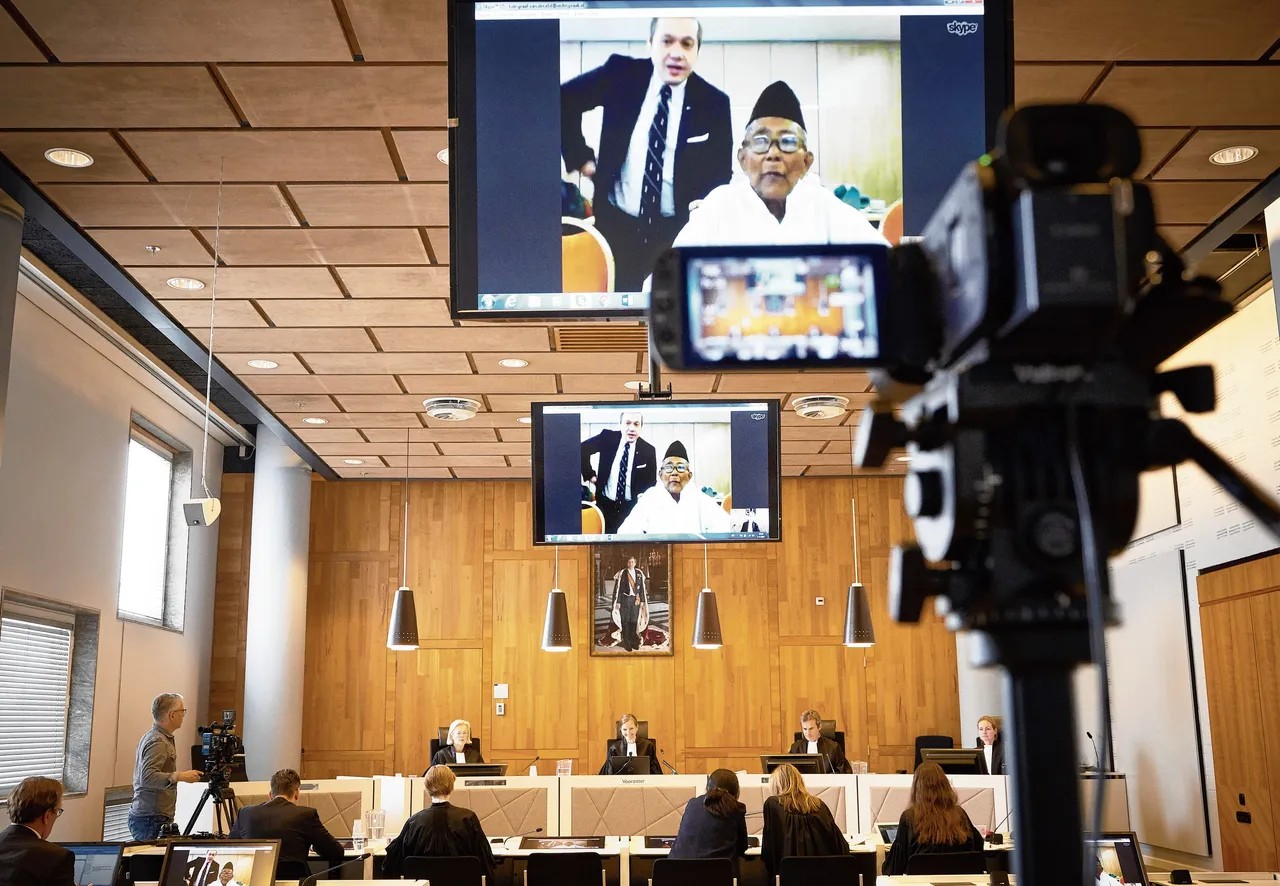
Description
This course will help you understand how societies deal with past violence and injustice. Transitional justice and human rights are ‘booming’ fields in research and practice. At the same time, they face huge global challenges. Conventional institutions that protect them are under threat.
Transitional justice has been called a ‘defining global movement of our time.’ As both academics and practitioners engage with the field, it addresses the long-term effects of human rights violations and provides instruments to deal with them through judicial and non-judicial approaches: criminal trials and tribunals, apologies, historical commissions, commemorations and institutional reforms. Dealing with past wrongdoings has also developed into a conversation about ongoing injustices, which often means to link local, national, and transnational concerns. Over the past few decades, the field has quickly grown. It has generated both praise and critique. While the first generation of transitional justice focused on the transition of states (from an era of injustice, violence and oppression towards peace and democracy), the new generation includes different actors and instruments, emphasizing restorative, retributive, reparative or redistributive justice, aiming for systemic and institutional change. That is why in this course, we will present the idea of transformative justice (Gready and Robins 2014): a new agenda for transitional justice practice that centers agency and participation of victimized people. In this course, through interactive engagement with participants, we will together explore the potential of transformative justice. We combine this bottom-up approach, focusing on lived realities of victimized people, with an understanding of institutional logics of injustice.
The course will teach participants to operationalize concepts and tools of Transitional Justice and human rights for both research and practice, familiarize them with challenges of the fields, and provide them with a critical understanding of justice questions at a local, national, and global level.
Lecturers
Prof. dr. Nicole Immler
Dr. Niké Wentholt
Target audience
- Master students and postgraduate/PhD-students studying the fields of transitional justice and/or human rights, or related fields like war studies, ecocide, genocide, institutional injustice, social justice. Bachelor students with specialized profiles are also warmly welcomed.
- Professionals and practitioners working in the fields of transitional justice and/or human rights who would like to deepen their knowledge
Aim of the course
In this course, we will share with you the most interesting developments in the worlds of transitional and transformative justice and human rights, our own insights from research into institutional and historical injustice (see www.dialogicsofjustice.org), and different case studies to illustrate how we can rethink justice and a just world. We will combine lectures and interactive seminars with an excursion to The Hague, the city of Peace and Justice, to ensure that the fields of transitional justice and human rights come alive to everyone who participates in the course. We have extensive experience in teaching these topics and have always enjoyed learning from participants too – and, we have seen before how much participants can learn from each other.
This course aims to, firstly, introduce you to critical perspectives on human rights and transitional justice. Secondly, it suggests new lenses and approaches to think more holistically about both fields. Thus, the course helps post-graduate students of both Master- and PhD-level to get acquainted with new ideas that are directly connected to empirical findings from the instructors’ research. It also offers them equally useful and challenging tools to re-think the topic of their studies. For professionals with a practitioner background, who are also very welcome, the course provides scholarly concepts that have proven themselves both in academia and in practice. These can help practitioner students to re-think their work and more effectively engage with questions of justice and transformation.
Both instructors work with theory and empirics of transitional justice and human rights in their respective research projects, most notably Dialogics of Justice (www.dialogicsofjustice.org). Here, we study a wide variety of cases of historical and systemic injustice. The course introduces these cases to illustrate and re-imagine the scholarly concepts that we present. Thus, the course aims to offer theoretical knowledge that is empirically-grounded, and case-study material that is theoretically solid.
Study load
The standard study load is 2 ECTS.
Participants may elect to write an additional essay or policy paper (detailed instructions will be provided) for an additional 2 ECTS, making a total of 4 ECTS.
Costs
-
Course fee:
€985.00
-
Student fee:
€495.00
-
Included:
Course + course materials + lunch
-
Housing fee:
€275
-
Housing provider:
Utrecht Summer School
A discount of EUR 490 to the standard fee (i.e. net fee of EUR 495), may be applied to by a limited number of participants who work in the field of transitional justice and/or human rights and who are from the Global South. This discount can be applied for in the motivation letter. It is granted at the discretion of the course director.
Additional information
The housing costs do not include a Utrecht Summer School sleeping bag and/or pillow. These are separate products on the invoice. If you wish to bring your own bedding, please deselect or remove the sleeping bag from your order.
Tags