Course
Better Humans, Better World: Mastering the Inner Development Goals
Bringing the Inner Development Goals to life through practice and lived experience

Bringing the Inner Development Goals to life through practice and lived experience
The world's biggest problems aren't solved by better strategies alone, they're solved by better humans. This workshop is about becoming one. What kind of person do I need to become to create the change I want to see in the world? This is the question at the heart of this course.
The Inner Development Goals Guide
In 2015, the UN adopted 17 Sustainable Development Goals to end poverty, promote prosperity, and protect the planet. Progress has been underwhelming. Swedish pioneers realized why: the root problem lies in our lack of inner capacity. After three years of research involving more than 4,000 scientists and practitioners, they presented the Inner Development Goals: five dimensions (Being, Thinking, Relating, Collaborating, and Acting) encompassing 25 skills to help us achieve the Sustainable Development Goals and live purposeful, sustainable, and productive lives.
The aim of this five-day workshop is to explore this rich guide in fine-grained detail and breathe life into it by applying it to our own lives. How does inner work translate into concrete outer impact? What kind of person do I need to become to contribute meaningfully to the world I care about? This is personal development that doesn't stop at self-improvement, it extends into becoming a source of positive change in the world. If you care about the Sustainable Development Goals but know that outer change requires inner work, this workshop offers that integration.
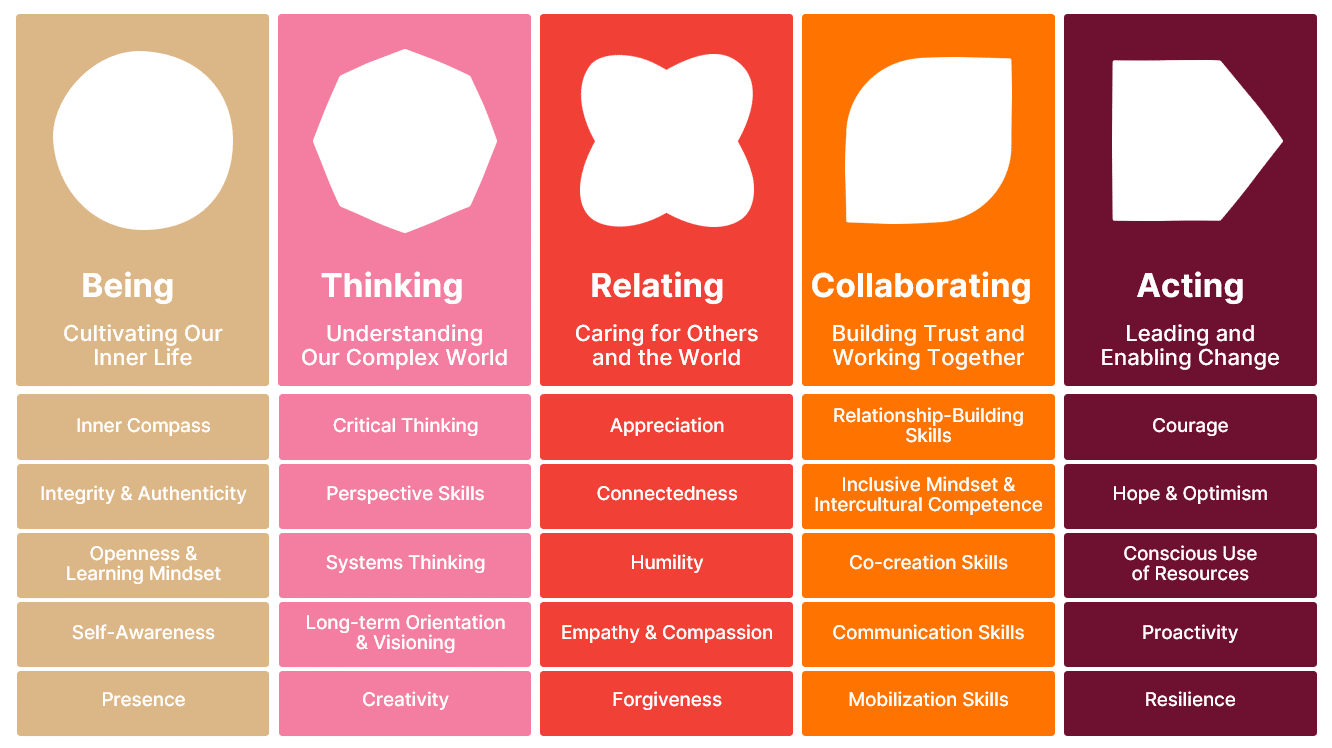
Although the IDG guide is best understood holistically — all five dimensions are interwoven — each day we will accentuate one of the five dimensions. The learning happens in the doing, through embodied practice, honest reflection, and vulnerable sharing. Throughout, our pedagogy is hands-on, experiential, and grounded in the belief that lasting development emerges when we integrate insight with practice. We seek both philosophical depth and practical application, and we expect you to explore your assumptions, habits, and blind spots with honesty.
But not for the faint hearted!
We believe that meaningful leadership development goes deeper than tools and templates. It requires genuine inner work that connects to real-world impact. We ask you to bring yourself fully: your struggles, your blind spots, your genuine questions about how you can embody these 25 skills and become a force for positive change. If you're looking for comfortable inspiration, or theory you can observe from a distance, this isn't it. If you're ready to look honestly at how you show up in the world and do the inner work that real outer change requires, you're very much welcome. This course assumes some familiarity with personal development work and a genuine willingness to engage vulnerability. We work with personal cases, dive into real dilemmas you're facing, and use peer consultation to learn from each other's challenges.
By the end of the five days, you will leave with a clearer inner compass, a more grounded presence, deeper relational skills, a collaborative mindset, and a practical change plan. Most importantly, you will understand how inner development becomes outer impact.
The Inner Development Goals guide provides a powerful map, but to truly bring it to life we weave in decades of pioneering wisdom from those who have long understood that outer transformation requires inner development.
From the compassion and connection tradition, we draw on Joanna Macy's Work That Reconnects (facing crisis with active hope), Thupten Jinpa's research on compassion (cultivating genuine care beyond our immediate circles), and Marshall Rosenberg's Nonviolent Communication (connecting across difference with empathy and clarity).
From systems thinking and collective intelligence, we integrate principled negotiation from the Harvard Negotiation Project (working with conflict constructively) and Otto Scharmer's Theory U (presencing and deep listening to emergent futures).
From parts-based and embodied approaches, we work with Voice Dialogue (recognizing and compassionately engaging inner sub-personalities), Ron Kurtz's Hakomi Method (body-centered mindfulness revealing unconscious patterns), and Gregory Kramer's Insight Dialogue (bringing mindful presence into conversation).
From meaning and purpose frameworks, we explore Susan Wolf and Michael Steger's work on meaning (connecting subjective passions with genuinely worthwhile activities), Erich Fromm's distinction between having and being (grounding ourselves in presence rather than achievement), Tim Kasser's research on materialism (understanding how values shape well-being), and Fred Bryant and Joseph Veroff's work on savoring (mindfully noticing and extending positive experiences).
Finally, Roman Krznaric's work on becoming good ancestors challenges us to extend our circle of care across generations and take long-term responsibility for the world we leave behind.
By integrating these rich traditions and practices throughout the five days, we transform the IDG guide from abstract concepts into lived, embodied experience.
The courses will start at 10:00 hours every day, and end at around 16:00 hours
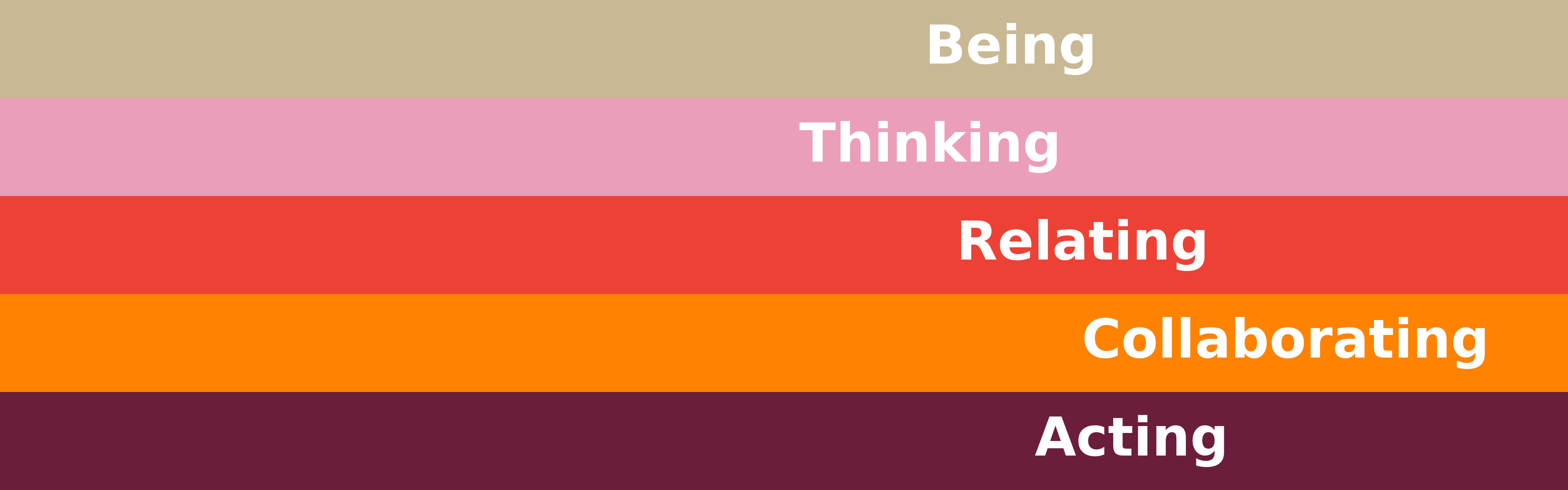
Day 1 – Being (Cultivating Our Inner Life)
On the first day, we deepen our awareness of inner experiences and their dynamic relationship with the world around us to nurture embodied presence, clarity of purpose, and thoughtful responses when we face complexity.
Day 2 – Thinking (Understanding Our Complex World)
Expanding clarity, considering diverse perspectives, and imagining long-term consequences help us navigate complexity and make wiser decisions in our interconnected world.
Day 3 – Relating (Caring For Others And The World)
Connecting with kindness, compassion, and a sense of shared belonging to communities, the living planet, and future generations helps us to create a more just, inclusive, and flourishing world.
Day 4 – Collaborating (Building Trust And Working Together)
Developing relationships of trust, acknowledging diverse values, skills, and perspectives, and creating safe spaces enables everyone to contribute to shared purposes and collective impact.
Day 5 – Acting (Leading And Enabling Change)
Moving forward with courage and optimism, building collective agency, and acting with purpose and persistence turns visions into meaningful change in uncertain times.
Derek van Zoonen is dedicated to helping people lead more examined and meaningful lives.
He is a researcher and lecturer at the University of Oslo, where he collaborates with an interdisciplinary team at the crossroads of philosophy and psychology to explore human happiness and well-being. In particular, Derek’s research focuses on the role of meaning and positive (and negative) affect in the good life.
Before joining the University of Oslo, Derek held affiliations with Oxford University, Columbia University, Humboldt Universität in Berlin, and the University of Groningen, where he earned his PhD (cum laude) in philosophy. His dissertation on the role of pleasure in the good life won the Wierenga Rengerink Prize for the best dissertation of 2022 and was nominated for the Keetje Hodshon Prize for outstanding work in the humanities.
Outside academia, Derek applies his expertise to help individuals enrich their lives. He is training in the Hakomi Method of mindfulness-based, body-oriented psychotherapy at the European Hakomi Institute (approved by the European Association for Psychotherapy and the European Association of Body Psychotherapy), and works as a counselor. Derek also organizes retreats and regularly gives workshops and talks to help people sharpen their thinking and deepen their feeling. He also loves to support people engaging with altered states of consciousness, such as those induced by breathwork or psychedelics, helping them navigate these transformative experiences.
Imre founded the Compassionate Leadership Institute and TrueVoice Academy and is an international trainer and (team)coach in higher education, politics and development aid agencies. His expertise lies in personal development, communication and group dynamics. He has a passion for empathic and compassionate communication, personal leadership, finding meaning and critical thinking. As a coach he brings out the best of people in a disarming and an inspiring way. He likes to ask probing questions, challenge assumptions and analyse arguments, all aimed at growth and learning.
For seven years he ran the Better World Foundation in The Netherlands that organized intensive traineeships about practical idealism.
An idealist in heart and soul, he likes to use his critical mind to better the world. Critical when needed, with humor when possible. He likes to connect heart and mind when doing his coaching. He has worked with many politicians and members of parliament, development organisations in Uganda, Laos and Vietnam amongst others, for commercial companies and many universities such as the International Space University in Strasbourg, the Honours Programme at the University of Groningen, Nyenrode Business University and students of the University of Beijing.
For those curious how this inner work plays out in leadership, he has written an introduction to compassionate leadership.
To be eligible for the student fee, please send an email to imrevegh@protonmail.com
The housing costs do not include a Utrecht Summer School sleeping bag. This is a separate product on the invoice. If you wish to bring your own bedding, please deselect or remove the sleeping bag from your order.
For more detailed information on student housing in Utrecht please click here.